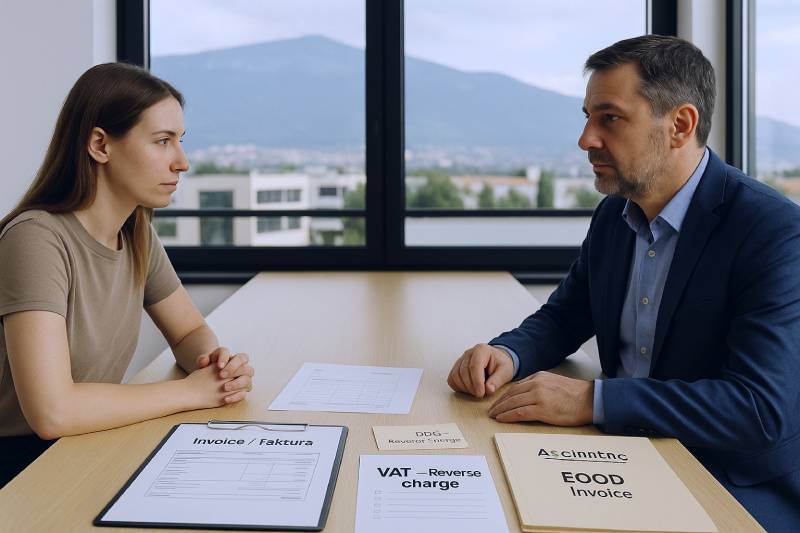

To pay zero tax legally in Bulgaria in 2026, you structure your company and your personal residency so that taxable profits or taxable presence in Bulgaria are minimized within the law—by managing decisions outside Bulgaria when appropriate, choosing the right entity, and timing salary, dividends, and filings with clean documentation.
Key Takeaways
What “zero tax legally in Bulgaria” really means
Zero can mean: zero Bulgarian corporate tax, zero Bulgarian personal tax, or near-zero overall tax across jurisdictions. The outcome depends on where your company is effectively managed, where you are tax-resident, and whether there is a permanent establishment in Bulgaria. Before you lock a plan, read the public guidance and use the official e-services of the National Revenue Agency (NRA). For mobility, VAT and cross-border coordination, consult the European Commission, and when you need the primary legal texts or EU directives, access them on EUR-Lex.
| Goal | What it means in practice | Best for | Key levers | Proof you will need |
|---|---|---|---|---|
| Zero corporate tax in Bulgaria | Profits are not taxable in Bulgaria because there is no Bulgarian corporate residence or permanent establishment | Remote founders managing abroad | Place of effective management, arm’s-length intercompany terms | Board minutes held abroad, contracts, decision logs |
| Zero personal tax in Bulgaria | You are not Bulgarian tax-resident under days and ties tests | Digital nomads, mobile executives | Residence certificate elsewhere, travel tracking | Leases, utility bills, health cover outside Bulgaria |
| Near-zero overall tax | Low corporate + low personal taxes across countries | Crypto/IP founders, lean teams | Retained earnings, dividend timing, treaty use | Audit-ready books, policy documents, substance |
Bulgarian company types and how they fit a low-tax strategy
Foreigners can own 100% of a Bulgarian company. Choose a legal form that supports governance, banking, and how you pay yourself—while keeping management where it should be.
| Form | Ownership | Trading allowed | Management/engagement | When it helps | What to watch |
|---|---|---|---|---|---|
| EOOD (single-owner LTD) | One foreign owner | Yes | Self-insured owner, salary, or management contract | Solo founders who want flexible payouts | Document decision-making outside Bulgaria if needed |
| OOD (multi-owner LTD) | Two or more owners | Yes | Management contracts; board-style resolutions | Co-founders with split responsibilities | Clear protocols to avoid default BG management |
| AD/EAD (joint-stock) | Scale-ups and funded teams | Yes | Boards and executive contracts | When governance and investor optics matter | Higher admin cost; stricter governance |
| Branch (of a foreign company) | Foreign parent | Yes | Local director signatory | Operate in Bulgaria with foreign HQ | By design, a Bulgarian taxable presence |
| Representative office | Foreign parent | No | Liaison staff only | Market research, no revenue | Not a profit vehicle; can’t sell |
To understand why the jurisdiction itself is attractive, review the reasons Bulgaria is the best choice for company formation. If you want a quick path from idea to entity, follow how to register your company in Bulgaria in 6 steps, then fine-tune tax posture.
Residency, management location, and real substance

Your personal tax residency and the company’s place of effective management decide most outcomes. If you aim for zero corporate tax in Bulgaria, prove that strategic decisions happen elsewhere and that there is no Bulgarian permanent establishment for the profit-making activity.
| Lever | What to document | Why it matters | Examples of evidence |
|---|---|---|---|
| Personal residency | Days and ties (home, family, vital interests) | Sets where your salary/dividends are taxed | Residence certificate, lease, travel log |
| Effective management | Where key decisions are taken | Determines corporate residence in many treaties | Board minutes abroad; decision registers |
| Permanent establishment | Fixed place of business or dependent agent | Creates corporate tax in that country | No fixed sales office in BG; independent agents |
| Substance | People, processes, risk control | Supports cross-border positions | Org charts, SOPs, intercompany agreements |
You can verify company records at the official Bulgarian Commercial Register. If you operate with a Bulgarian IBAN while managing abroad, make sure your banking process is auditable; system oversight and rules are published by the Bulgarian National Bank.
Salary, dividends, and retained earnings: designing your personal cash plan
Most lawful low-tax plans use modest salary, retained earnings, and carefully timed dividends. First, get the framework for profits with an overview of Bulgaria’s corporate tax rate. If you are mobile, see how that pairs with a targeted digital nomad tax strategy that keeps personal exposure where you actually reside.
| Option | Where it’s taxed | Pros | Cons | Best for |
|---|---|---|---|---|
| Low salary | Payroll jurisdiction | Predictable benefits; supports permits | Creates personal tax in that country | Founders needing visas or social cover |
| Dividends | Company’s and shareholder’s residence per rules | Flexible timing, sometimes lower rates | May face withholding/personal tax | Mobile founders with treaty planning |
| Retained earnings | Company level | Defers personal tax; grows capital | No personal cash now | Reinvesting or treasury-focused founders |
Crypto and IP-heavy businesses: clean separation that auditors accept
Crypto founders often mix trading, staking, and IP monetization. Keep a strict wall between personal wallets and corporate treasury. Approve treasury policies at the board, define signatories, and map intercompany service fees at arm’s length if another entity holds IP or trading risk.
| Layer | What it does | Where decisions happen | Tax impact goal | Controls to keep |
|---|---|---|---|---|
| Bulgarian operating company | EU contracts, staffing, invoicing | Abroad or Bulgaria, as documented | Limit BG corporate exposure as planned | Minutes, D&O, intercompany pricing |
| IP/treasury entity | Holds IP or crypto treasury | Outside Bulgaria | Tax IP/treasury where rules are favorable | Board policy, custody rules, proofs |
| Founder personally | Residence choices and lifestyle | Nomad/other country | Low personal tax in chosen residence | Travel logs, residence certificates |
Address, bank account, and remote setup
Even if you manage outside Bulgaria, you still need a registered seat and a bank account to operate. Choose the address service that matches how remote you plan to be, then open a BG IBAN with good e-banking and connect bank feeds to your accounting system.
| Option | Includes | Typical cost (EUR) | Suited for | Notes |
|---|---|---|---|---|
| Registered seat | Legal address on record | 150–250 | Micro teams | Collect mail yourself |
| Virtual office + scanning | Seat, mail scan, call handling | 250–450 | Nomads | Great if you never visit |
| Co-working address | Seat, desk, meeting room | 600–1,200 | Client-facing work | Useful “substance” optics |
| Milestone | What happens | Typical time | Your task |
|---|---|---|---|
| Company registered | Entity and seat recorded | 1–2 weeks | Approve documents |
| Bank account live | BG IBAN, cards, e-banking | 1–2 weeks | Complete KYC |
| Accounting stack | Bank feeds, invoicing, archive | 2–3 days | Upload first docs |
| Payroll/VAT (if any) | Registrations and calendar | 3–7 days | Confirm bases and dates |
For a clear cost picture beyond tax planning, see how much it costs to set up a Bulgarian company. When you want a one-team solution from entity to monthly compliance, we deliver fast, secure and tax-optimized company registration in Bulgaria and keep your books tight.
Branches and representative offices: special notes
A branch of a foreign company creates a taxable presence in Bulgaria by design and rarely suits a “zero tax” plan. A representative office cannot trade at all; it’s useful for research and partner meetings but not for profits. If you need contracts and invoicing, use an EOOD/OOD/AD instead and document management location.
| Structure | Can trade? | Tax presence | Good for | Limitations |
|---|---|---|---|---|
| Branch | Yes | Bulgarian corporate tax exposure | Operating locally with foreign HQ | Not ideal for “zero tax” aims |
| Representative office | No | Not a profit vehicle | Market research, pre-launch presence | No revenue; staff only for liaison |
Ownership, visas, and employing people
Foreigners may own 100% of a Bulgarian company. EU citizens can live and work under EU rules. Non-EU owners typically combine ownership with a residence permit and then enroll in payroll if they work locally. Align immigration and payroll early so your tax story remains consistent from day one.
Common pitfalls that kill a “zero tax” plan
| Mistake | Why it’s a problem | Fix that works |
|---|---|---|
| Running management from Bulgaria without records | Triggers Bulgarian corporate residence | Hold and minute board meetings abroad |
| No proof of foreign personal residency | Personal tax exposure in Bulgaria | Keep certificates, leases, insurance abroad |
| Commingling personal and company funds | Audit issues; reclassification risk | Separate accounts; formal dividends/loans |
| Ignoring EU coordination and treaty rules | Double tax or lost reliefs | Map EU guidance and apply treaty mechanisms |
| Weak or fake “substance” | Challenges under anti-avoidance standards | Use real processes, roles, and documents |
When to get professional help
Aggressive optimization should feel calm and boring—because your paperwork is impeccable. If you want a team that speaks growth and compliance, meet our accounting services in Bulgaria. We’ll map your residency, model cash-outs, and set a monthly rhythm that is fast and defensible.
Ready to design your lawful low-tax path?
Tell us your travel pattern, revenue model, and cash needs. We’ll outline the simplest lawful route to near-zero exposure in 2026 and give you a checklist you can execute this month. Book your free 30-minute consultation.
Frequently Asked Questions
Can I pay zero corporate tax in Bulgaria by managing the company from abroad?
Yes, paying zero corporate tax in Bulgaria by managing the company from abroad is possible if effective management and permanent establishment are outside Bulgaria and your documentation proves it.
Do I need to be a Bulgarian tax resident to use a Bulgarian company?
No, you do not need to be a Bulgarian tax resident to use a Bulgarian company, provided your personal residency and the company’s management location are lawfully established elsewhere.
Is a representative office a good way to pay zero tax?
No, a representative office is not a good way to pay zero tax because it cannot trade and is not designed to earn profits.
Can I combine low salary with dividends to reduce my overall taxes?
Yes, you can combine a low salary with dividends to reduce overall taxes when the salary–dividend mix follows legal rules and matches your personal residency.
Is a Bulgarian branch helpful for a zero-tax strategy?
No, a Bulgarian branch is usually not helpful for a zero-tax strategy because it creates a taxable presence in Bulgaria by design.